How adjoining rooms transform your kitchen into a gathering space

Adjoining spaces—like butler’s pantries, mudrooms, and open dining areas—transform the kitchen into a connected hub where function, flow, and gathering come together seamlessly.
Kitchens tend to become the “everything” room—serving as the drop zone for groceries, mail, school projects, as well as the center for meal prep, dining, and family gatherings. When all that happens in a single place, it can start to feel cluttered and disconnected, disrupting the ease and flow of daily life.
By adding or updating connecting spaces like a butler’s pantry, mudroom, or open dining area, your kitchen starts to feel welcoming again. It’s no longer a congested, overworked space of the house, but a kitchen that truly supports the way you live, making weekday routines easier and weekend entertaining more enjoyable.
If you’re ready to explore how adjoining spaces can elevate your kitchen flow, our Rebode Jumpstarter quiz is the perfect place to begin. In just a few minutes, you can define your goals, style, and budget—then instantly visualize your ideal design and connect with a local kitchen designer to bring it to life.
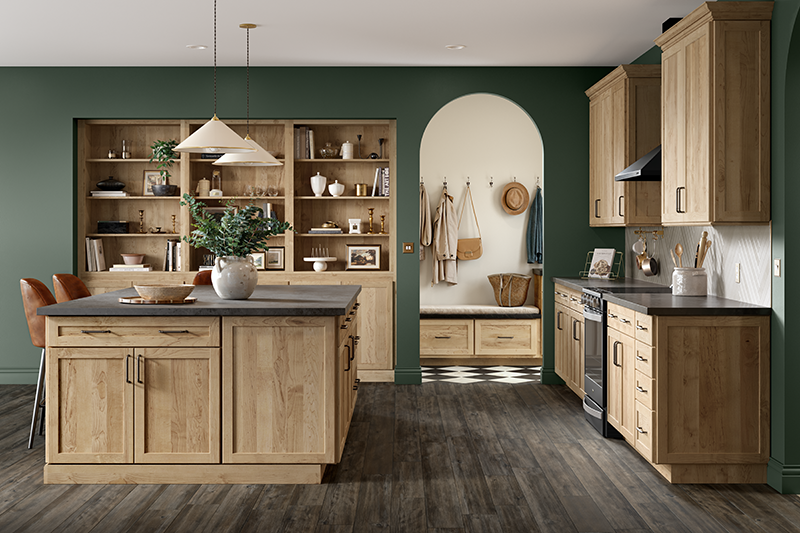
Photo from MasterBrand Cabinets.
Embrace the power of adjoining spaces
Adjoining spaces are functional extensions of your kitchen. Why does this matter in modern home design? These connected spaces create a natural connection between the place where you cook, gather, and unwind while reducing clutter, helping everyday routines feel easier and more organized.
Think of these extensions as part of a larger design story—one that blends visual harmony with practical function. When thoughtfully planned, they create a cohesive environment for busy mornings, relaxed family time, and all the dinner parties ahead. Let’s explore a few options for your kitchen’s adjoining spaces and how they can work smarter for your home.
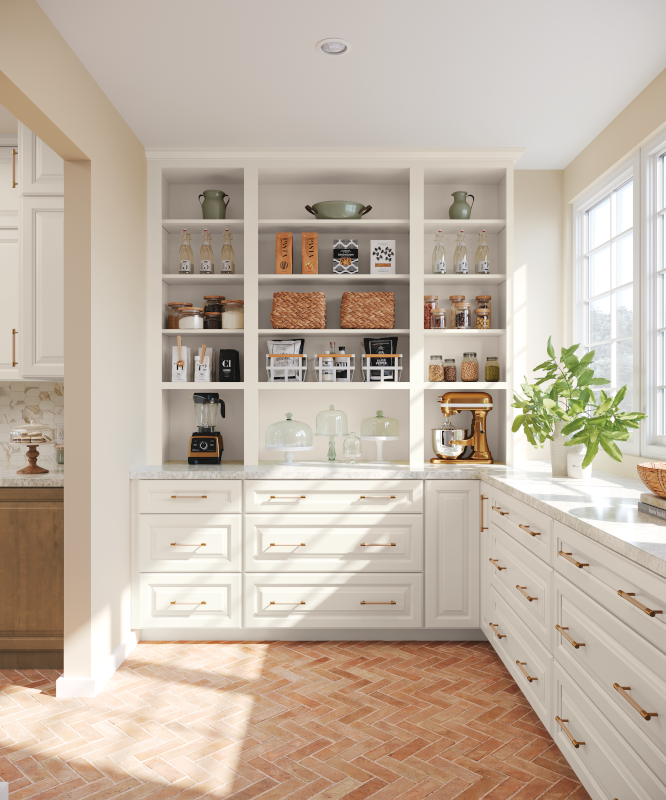
A butler’s pantry is the kitchen’s support system to enhance meal prep flow and create seamless continuity. Photo from MasterBrand Cabinets.
Butler’s pantry
A butler’s pantry brings organization and functionality, serving as a prep and storage space that keeps primary countertops clear. It’s ideal for staging meals, setting out dishes, or keeping hosting essentials close but out of sight. Many butler’s pantries are outfitted with beverage stations, a secondary sink, or built-in appliances. Think of it as the kitchen’s support system—enhancing meal prep flow, adding design interest, and creating seamless continuity between the kitchen and dining area.
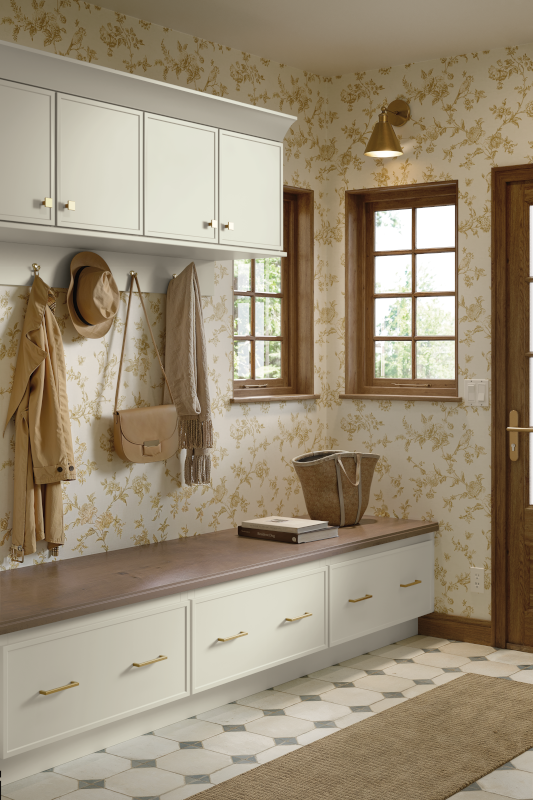
A mudroom is the gateway to a clutter-free kitchen. Photo from MasterBrand Cabinets.
Mudroom
A mudroom serves as the perfect drop zone for coats, bags, keys, pet supplies, and any other items entering from outside. By giving those items a home right when you walk in, you prevent clutter from making its way into the kitchen. For added convenience, your mudroom can connect directly to the pantry or laundry area—making it easy to unload groceries, toss muddy clothes into the wash, or grab a snack on the way out the door. Built-in benches, cubbies, and cabinetry keeps items organized and accessible. Think of your mudroom as the gateway to a calm, clutter-free kitchen.
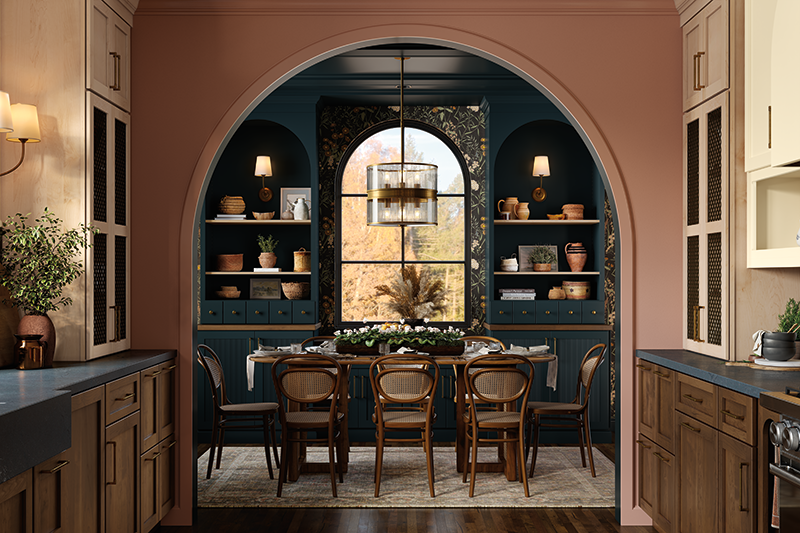
An open dining area creates a connection to your kitchen. Photo from MasterBrand Cabinets.
Open dining areas
An open dining area creates a visual and physical connection to your kitchen’s gathering zone. This area works beautifully for entertaining, as well as everyday family meals. A space that feels open, relaxed, and inviting encourages conversation and shared moments—from prepping meals together right through the final guest’s goodbye.
Maximizing flow and function in your adjoining spaces
When redesigning your kitchen, don’t forget the adjoining rooms—they’re key to creating a space that works as beautifully as it looks. Start by thinking in zones: cooking prep, storage, entry, and gathering. This approach helps you define your kitchen’s needs and pinpoint the best place to begin. Custom cabinetry and tailored storage make each adjoining space functional and organized, while cohesive finishes, like matching flooring and coordinated hardware, tie everything together. You can even preview kitchen design styles at home before you remodel, giving you confidence in your choices and helping the adjoining room feel like part of a cohesive plan. Connect with our professional designers to plan layouts that feel intuitive and functional, ensuring every adjoining space supports your kitchen’s workflow.
Bring your connected kitchen to life
Imagine a kitchen where cooking, gathering, and entertaining flow effortlessly together. Take the Rebode Jumpstarter style quiz to explore ideas for your dream space, and see how our experts can bring it to life. Create visual continuity and seamless flow through the architectural connection of adjacent living and dining areas—transforming your kitchen into a functional, connected hub for everyday life and memorable entertaining.