How your kitchen layout shapes the way you live

Your kitchen layout isn't just about where things go—it's about how life moves through the space. When each zone works with purpose, the room stops feeling like a bottleneck and starts feeling like the connected, intuitive heart of your home it was always meant to be.
Think about the last time your kitchen actually got in your way. Not because it was too small necessarily—but because it was set up all wrong.
The counter that's always crowded. The drawer someone else needs right when you're standing in front of it. The prep work that stalls because there's nowhere to stage ingredients while the stovetop is already in use.
These are the impactful layout inconveniences that signal it’s time for a new kitchen.
When a kitchen is structured to support different daily routines, it becomes adaptable—working just as well for one person as it does for a busy household or a house full of guests.
Explore how a more intentional kitchen layout can transform the way your space feels and functions with Rebode Jumpstarter. We’ll connect you with a local kitchen designer who can evaluate your current layout and help design a modern kitchen that feels intuitive and anticipates your everyday needs.
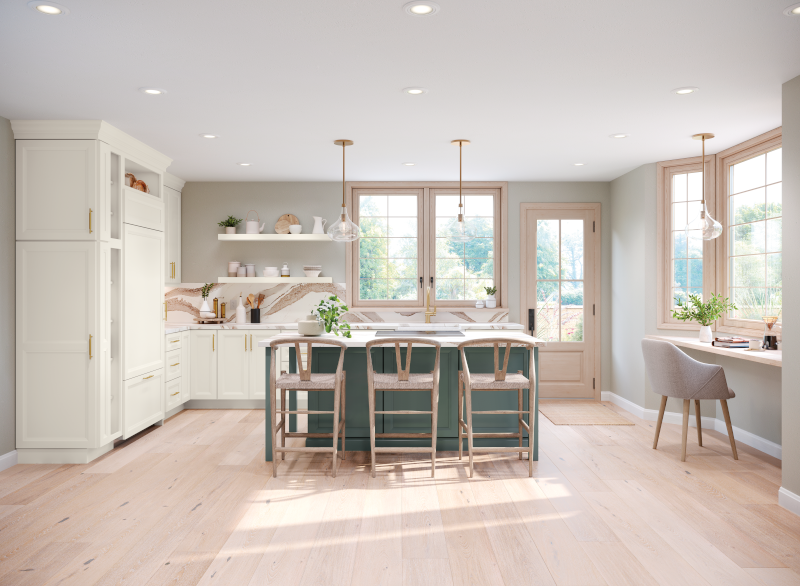
Photo by MasterBrand Cabinets.
The modern kitchen is a shared-use space
Traditional layouts were built around a single cooking workflow: one person, one primary task zone, one direction of use.
But today’s kitchens operate differently.
They function as shared environments where meal prep overlaps with clean-up, breakfasts happen alongside dinner prep, and multiple people move through the space at once.
When many tasks are forced into one area, the kitchen starts to feel interrupted instead of intuitive.
The shift to functional zoning
Modern kitchen design solves the shared-use space by distributing tasks into functional zones for efficiency:
- Prep zone: chopping, mixing, and ingredient staging
- Cooking zone: stovetop, oven, and active heat-based work
- Cleaning zone: sink, dishwasher, drying, and reset workflow
- Storage zone: cookware, dry goods, and everyday essentials, including integrated appliance storage
- Beverage zone: coffee, drinks, and grab-and-go items
This structure reduces competition for counter space and allows each task to exist in its own defined area.
The result isn’t just organization—it’s flow. Less interruption, fewer bottlenecks, and clearer separation between active and passive use.
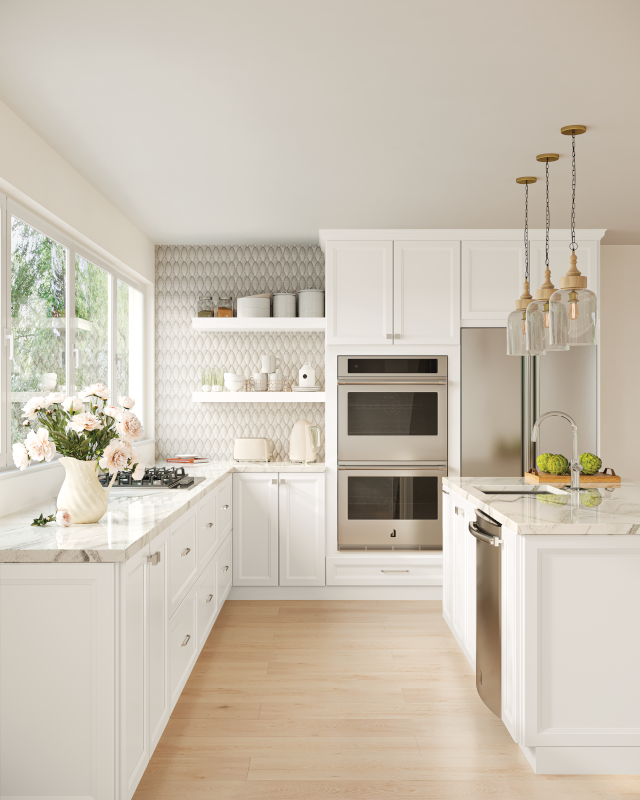
An intuitively designed kitchen by MasterBrand Cabinets with plenty of space for parallel workflow.
Designing your kitchen for parallel use
Once zones are established, the next layer is designed for parallel use, so family and friends can be in the kitchen at the same time without getting in each other’s way.
This is where thoughtful, spatial planning makes all the difference:
- Kitchen islands function as both an independent workstation and a central gathering point, supporting prep, cooking, and conversation simultaneously.
- Counter landings create intentional staging areas so tasks can pause and continue smoothly, while appliance garages help keep everyday surfaces clear and usable.
- Clear pathways guide movement around active zones, allowing multiple people to circulate without disruption.
- The pantry becomes an integrated extension of the kitchen, with organized built-ins that support efficiency across cooking and storage tasks.
- Thoughtful seating supports working, dining, and socializing without interrupting flow or blocking key work areas.
When these elements work together, the kitchen feels more open and efficient—not because the space is larger, but because it’s designed to support multiple uses at once.
Create a connected, intuitive kitchen layout
Your kitchen can shift from reactive to responsive—adapting to the rhythm of daily life with ease through thoughtful design. A beverage station can operate independently during gatherings. Prep can happen while cooking is already underway. Clean-up can continue without interrupting conversations.
A kitchen designer helps translate these needs into a cohesive layout that reflects how your household actually lives and moves.
Explore how a more intentional kitchen layout can transform the way your space works and feels with Rebode Jumpstarter. We’ll connect you with a local kitchen design expert to bring your vision to life.
When a kitchen is designed with intention, it doesn’t just solve layout challenges—it reshapes how the space supports everyday living.