Kitchen floors and cabinets: Should they match, complement, or contrast?

Your floors and cabinets anchor the kitchen, shaping how it looks and feels. Whether you choose to match, complement, or contrast, working with a designer helps you make thoughtful choices that result in a cohesive, functional, and timeless space designed for the way you live.
Coordinating the visual relationship between your kitchen floors and cabinets can feel overwhelming when you’re trying to imagine it all on your own. These two elements anchor the space, help shape the kitchen’s day-to-day functionality, and set the tone for everything that follows—from countertops to hardware.
It’s why many homeowners face uncertainty in answering the question: Should floors and cabinets match, complement one another, or intentionally contrast? Concerns about clashing undertones or losing sight of the original vision can make the decision difficult to navigate.
The good news: Each approach can work beautifully when your preferences are aligned with finishes, undertones, lighting sources, and how you use the space. A collaborative design process brings clarity, letting homeowners and designers evaluate choices holistically so every element is intentional, balanced, and true to your vision. Tools like Rebode’s Jumpstarter style quiz can help you clarify your preferences early, giving you a clear starting point to explore combinations that fit your lifestyle.
This guide walks through each design direction—matching, complementing, and contrasting—showing how thoughtful coordination creates a kitchen that feels cohesive, considered, and built to last.
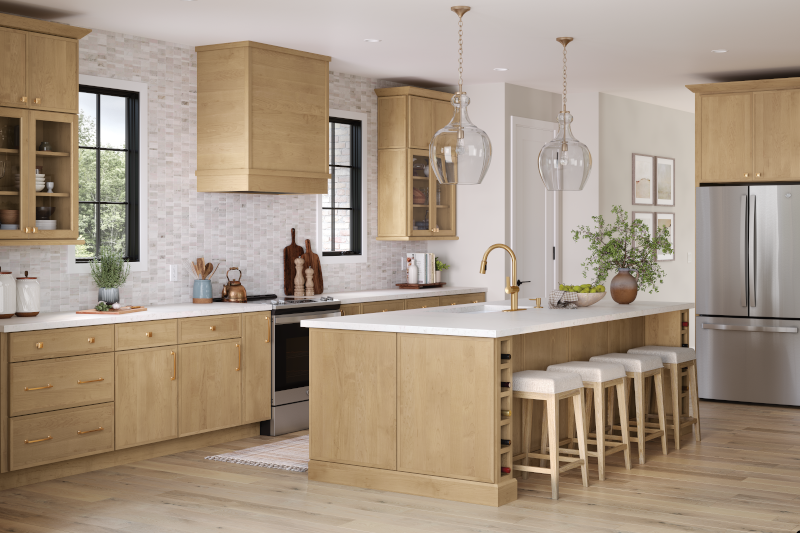
Matching kitchen floors and cabinets tie the room together, giving your kitchen a harmonious flow and a sense of effortless style. Photo by Masterbrand Cabinets.
Three ways to coordinate kitchen floor and cabinet design
Designers assess kitchen floor and cabinet coordination through three lenses: matching, complementing, and contrasting—carefully considering how each choice affects visual flow, balance, and the room’s overall functionality.
The right approach for your space depends on the experience you want when you walk into your kitchen every day, and how that atmosphere supports the way you live
Matching: Cohesive and seamless
Choosing matching floors and cabinetry creates a seamless, unified foundation that brings a sense of calm and visual continuity to the kitchen—an ideal approach for those drawn to clean lines and a minimalist aesthetic.
To prevent the space from seeming one-dimensional, designers layer in subtle variation through differences in grain, finish, or material sizing. These thoughtful refinements maintain cohesion while adding depth and dimension, resulting in a quietly sophisticated kitchen.
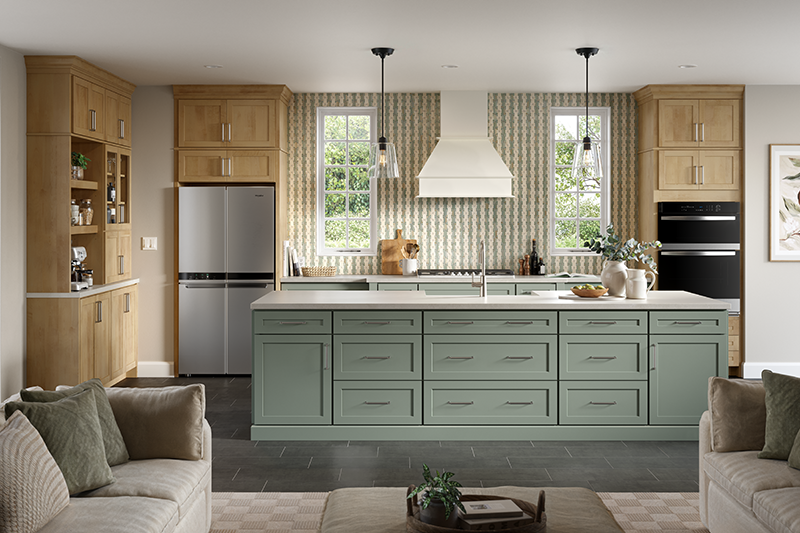
Thoughtful complementing combinations of floors and cabinets add richness and harmony, creating a kitchen that feels balanced and dynamic. Photo by Masterbrand Cabinets.
Complementing: Balance without uniformity
Complementary finishes maintain a visual relationship without mirroring, allowing layered textures and tones to interact in ways that enhance depth, highlight functional zones, and foster a sense of harmony throughout the space. Similar undertones create cohesion, while differences in texture, grain, or finish add depth and interest.
This approach strikes a thoughtful balance between consistency and personality, making it a flexible choice that adapts over time. Designers skillfully fine-tune hues, textures, and material proportions so the space feels balanced without complete uniformity.
Contrasting: Bold and dynamic
Contrast brings energy and visual momentum to a kitchen, creating a confident, expressive, and design-forward space. Light cabinetry paired with darker floors can ground the room, while darker cabinets against lighter flooring draw the eye and create striking focal points.
Because contrast is immediately noticeable, it requires more deliberate planning across the rest of the space. Designers leverage their expertise to evaluate visual weight, lighting, and surrounding materials—like countertops, hardware, and wall finishes—ensuring bold contrasts remain balanced and visually engaging without overwhelming the room. When thoughtfully executed, contrast adds depth and dimension, resulting in a kitchen that feels bold and dynamic.
The subtle details that shape your kitchen
You want to see the bigger picture, right? Beyond color and material choice, subtle factors can shift how kitchen floors and cabinets work together. Undertones, sheen, texture, and both natural and artificial lighting all influence the look—and what seems right on small samples can read differently once it’s in the space.
Working with a designer helps you understand and see these nuances up close. They can highlight how subtle shifts in light, texture, or finish will interact, show materials together at scale, and reveal relationships you might not notice on your own. This collaboration ensures your final choices feel deliberate, balanced, and fully aligned with the way you live so your kitchen comes together exactly as you envisioned.
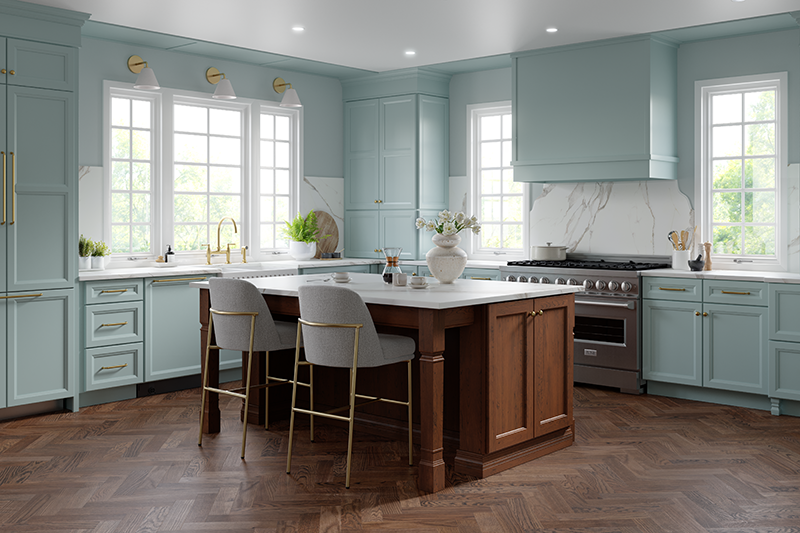
Bold contrasts between floors and cabinets bring energy and personality to your kitchen, creating a space that feels confident yet grounded. Photo by Masterbrand Cabinets.
Kitchen floors and cabinets: Coordinated for a space that feels just right
There’s no right or wrong answer to whether kitchen floors and cabinets should match, complement, or contrast. Each approach works beautifully when chosen with intention and considered in the context of your daily life.
The high-performing kitchens are built on clear needs, informed choices, and collaborative design rather than rules or trends. When floors and cabinets are coordinated thoughtfully, the kitchen does more than look cohesive—it feels right.
Ready to explore your perfect combination? Take the Rebode Jumpstarter style quiz to discover your ideal look, then get matched with a local kitchen designer who can bring your floors and cabinets into harmony, creating a kitchen that is both functional and effortlessly beautiful.