Step-by-step kitchen remodel: What to expect at every stage

A well-designed kitchen supports the way you live. A step-by-step kitchen remodel ensures that vision becomes reality with clarity, structure, and coordinated planning.
The kitchen remodel process unfolds in distinct stages, and decisions made early have a direct effect on budget, timeline, and long-term performance.
With your inspirational mood board and Rebode remodel profile defining your priorities, you can approach each phase with a clear understanding of which decisions to make, when to make them, and how each choice affects the next—so you can move forward without guesswork.
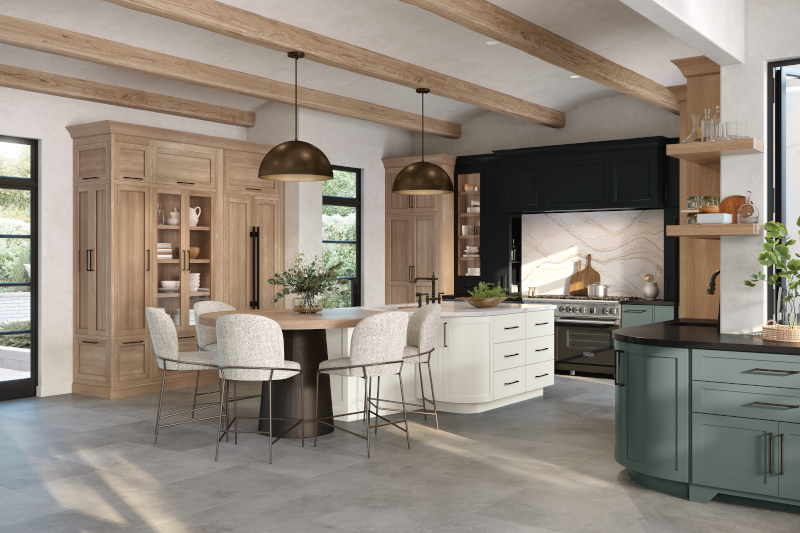
Photo by MasterBrand Cabinets.
Stage 1: Planning
General timeline: 2–4 weeks
Planning transforms inspiration into a strategy. The clarity established here affects budget, design, and construction timeline.
What happens during the planning stage:
- Goal setting: Assess the current functionality of your kitchen. Identify workflow inefficiencies, storage limitations, lighting gaps, and layout constraints. Prioritize based on how you want to cook, gather, and live in your kitchen—not just by aesthetics.
- Scope definition: Determine the level of change needed, whether it’s a cosmetic change (counter and cabinet updates) or structural change (improved layout flow, demolition to interior/exterior walls). Scope decisions influence permitting, trade professional involvement, and timeline length.
- Pre-measurements: Document wall lengths, cabinet spaces, and window placements to understand your existing layout and communicate your vision. Tools like the Rebode Measure mobile app allow you to capture and share dimensions with your designer.
- Budget framework: Establish an investment range aligned with your scope. Early budget clarity prevents redesigns later.
- Connect with a designer: Share your priorities, measurements, constraints, and inspiration. A designer evaluates feasibility, identifies risks, and begins shaping a buildable direction.
Why this step is important: Undefined goals and vague budgets are the most common causes of delays and change orders. When kitchen scope and investment are aligned early, every subsequent decision becomes more intentional.
Stage 2: Kitchen design
General timeline: 2–6 weeks
Design turns strategy into a buildable plan. This stage resolves layout, functionality, and product specifications with your kitchen designer before construction begins—when changes are still efficient and affordable.
What happens during the kitchen design stage:
- Design collaboration: The designer finalizes cabinet placement, appliance positioning, clearances, and traffic flow with your input and approval. Digital renderings allow you to evaluate proportion, spacing, and aesthetics before materials are ordered.
- Cabinet and appliance planning: Confirm cabinet quantities, configurations, modifications, and appliance dimensions. Appliance specs will sway cabinet sizing, electrical placement, and ventilation.
- Budget alignment: The proposed design is reviewed against your planned investment. Adjustments to budget are made now to avoid additional costs in later stages.
Why this step is important: Design is where costly mistakes are prevented. A thoroughly resolved plan reduces mid-project changes, protects your timeline, and ensures all components integrate properly.
Stage 3: Pre-construction & sourcing materials
General timeline: 3–6 weeks
Pre-construction and sourcing materials bridges design and construction. This phase ensures the project is technically ready to execute.
What happens during the pre-construction and sourcing materials stage:
- Final site measurements and technical verification: Precise on-site measurements confirm that cabinetry, appliances, and materials will fit as specified.
- Materials ordering: Cabinets, appliances, and specialty materials are ordered based on manufacturing lead times. Semi-custom and premium cabinets typically require extended production schedules.
- Permits and code compliance: If structural, plumbing, or electrical changes are involved, permits are secured to meet local regulations and inspection requirements.
- Trade scheduling and coordination: Electricians, plumbers, installers, and other trades are scheduled in sequence. Proper coordination prevents idle time and avoids costly rescheduling.
- Temporary kitchen setup: A functional interim space minimizes disruption while your primary kitchen is offline.
Why this step is important: Thorough preparation protects the construction phase. When materials arrive on time and trades are properly arranged, construction can begin.
Stage 4: Construction
General timeline: 4–12 weeks
Your kitchen begins to take form as construction turns the approved plan into reality. Coordinated sequencing, project management, and careful oversight of materials and skilled trade professionals ensure the remodel runs smoothly and delivers the intended quality.
What happens during construction:
- Demolition: Existing cabinetry, surfaces, walls, and fixtures are removed.
- Structural updates: Wall adjustments, flooring changes, and structural reinforcements are completed according to approved plans.
- Plumbing and electrical work: Utilities are repositioned to support new appliances, lighting plans, and layout changes.
- Cabinet, countertop, and flooring installation: Cabinetry is installed first, followed by countertops, then flooring and finishing elements in coordinated order.
- Appliance installation and testing: Appliances are installed, connected, and verified for operation.
Why this step is important: With stages 1-3 fully resolved, construction becomes a controlled execution phase rather than a reactive one.
Stage 5: Finishing touches & handover
General timeline: 1–3 weeks
The final phase focuses on refinement, inspection, and completion.
What happens during finishing touches and handover:
- Hardware and trim: Handles, moldings, fillers, and detailing are completed.
- Paint and backsplash: Final surfaces are installed and touch-ups are addressed.
- Inspections and adjustments: Cabinet alignment, door function, appliance operation, and finish quality are reviewed and corrected if needed.
- Final clean and handover: The space is cleaned and prepared for your use.
Why this step is important: Precision during finishing ensures longevity, performance, and visual cohesion.
Finishing your kitchen remodel, step-by-step
A successful step-by-step kitchen remodel isn’t defined by inspiration alone—it also requires clarity and coordination. Each stage builds on the last: Decisions made during planning affect design, design affects pre-construction and materials sourcing, which affects construction efficiency.
Throughout the process, a kitchen designer acts as your strategic partner—anticipating challenges, guiding key decisions, and ensuring the plan is cohesive, functional, and structurally sound before construction begins.
If you’re evaluating your next steps, begin by clarifying your scope and design priorities. The Rebode quiz is designed to identify the layout, functional, and style considerations that will shape your remodel, and connect you with a designer prepared to guide the process from strategy to installation. You can also update your Rebode Profile anytime as you refine your plans and priorities.