Understanding the costs that drive a kitchen remodel budget

The idea of a kitchen transformation excites homeowners—until the costs come into view. Without a clear budget framework, remodel expenses can feel abstract, making it harder to take the next step toward what is a thoughtful, rewarding investment in your home.
Kitchen remodel costs don’t have to feel unpredictable. They are shaped by design goals, material selections, and construction labor. With expert guidance and a transparent remodeling roadmap, you can see exactly where your money goes, make informed decisions, and move forward with confidence.
In this guide, we break down the key cost factors that influence your kitchen remodel budget. Take the Rebode Jumpstarter style quiz to create a clear plan—and get matched with a local designer who can guide you through your remodel every step of the way.
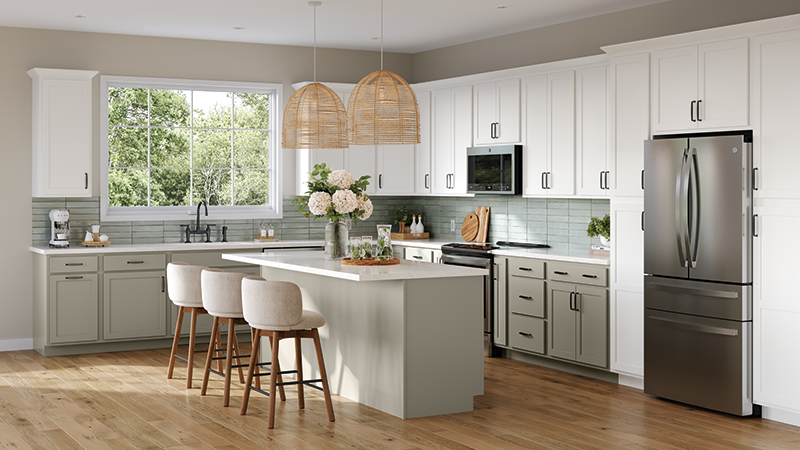
Photo by MasterBrand Cabinets.
Why kitchen remodel costs often feel unclear
A kitchen remodel is a series of interconnected decisions that influence one another: layout, cabinetry, surfaces, appliances, finishes, and installation all affect the total cost. Adjust one element, and it can shift your overall budget.
Most uncertainty doesn’t come from the total investment—it comes from not knowing how costs are structured. Homeowners often wonder:
- What’s a realistic budget for my space and goals?
- Where should I invest for the biggest long-term impact?
- Which decisions tend to create unexpected costs later?
A professional kitchen designer provides structure. Instead of guessing, you work from a clear, strategic plan that aligns your vision, priorities, and budget from the beginning.
The core elements driving a kitchen remodel budget
While every project is unique, most of the budget is shaped by five primary categories. Understanding these early helps you plan with confidence instead of reacting to costs as they arise.
1. Cabinetry
Cabinetry is often the largest line item because it defines the function and visual identity of the space. From stock, semi-custom to premium cabinets, your cabinet grade selection impacts durability, storage efficiency, and long-term usability.
Costs are driven by the level of customization, material quality, and storage features you choose. Moving from stock to semi-custom or fully custom cabinetry increases both flexibility and overall investment.
Key factors:
- Construction quality (materials, joinery, and finishes)
- Door styles and design details
- Storage solutions and interior organization
- Customization vs. standard sizing
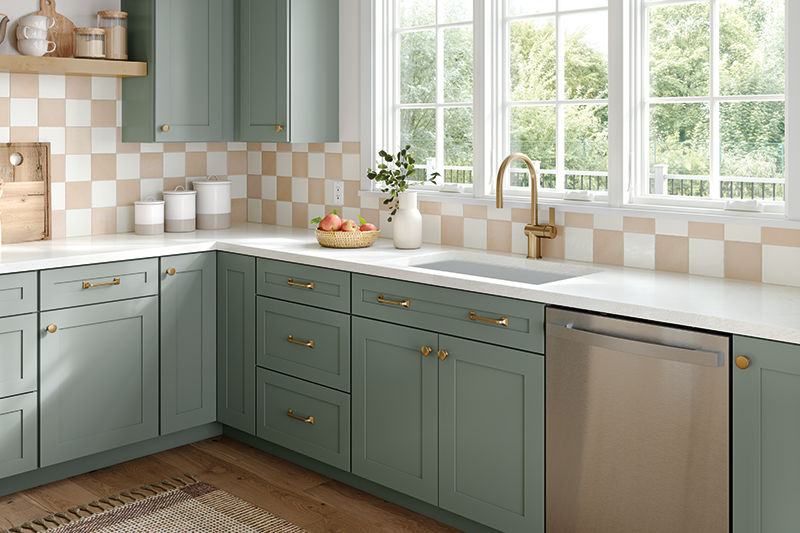
Appliances, surface selections, and cabinetry by MasterBrand Cabinets influence both daily performance and the visual story of your kitchen.
2. Layout and structural changes
Changes to layout and the home’s structure, such as moving walls, plumbing, gas, or electrical, can increase costs but also dramatically improve function, flow, and long-term usability.
These updates require additional labor, permits, and coordination among vendors. This is where your designer helps with logistics by evaluating:
- Workflow and kitchen traffic patterns
- Appliance placement, spacing, and clearances
- Opportunities to improve openness or define purposeful zones
By planning layout strategically, designers help prioritize where structural changes will deliver the greatest return—while avoiding unnecessary modifications that can increase costs without improving performance.
3. Countertops and surface selections
Countertops and surfaces shape both the design direction and long-term durability of your kitchen. Material choices vary in cost, maintenance requirements, and performance over time, directly influencing how your overall remodel budget is allocated.
Higher-end materials or more complex installations typically require more precise installation so you get everything you want, down to the detail.
Key factors:
- Material type
- Edge profiles and thickness
- Seam placement and installation complexity
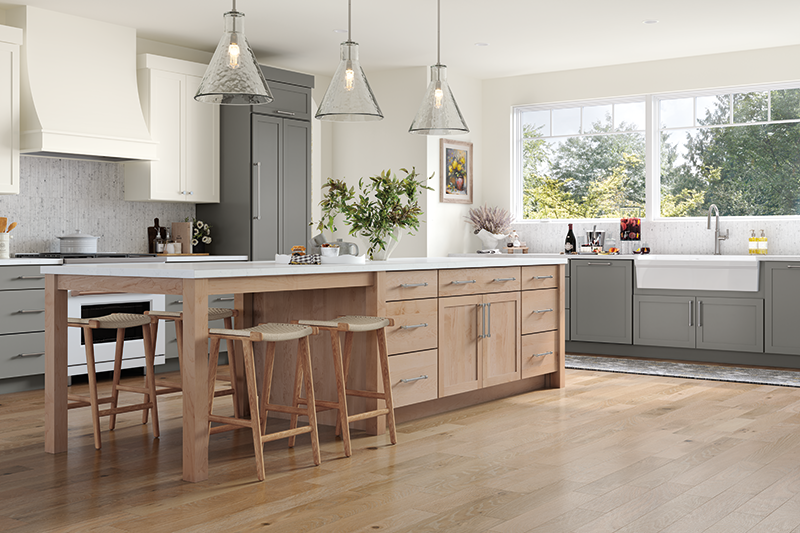
Budgeting becomes a tool—not a barrier—to designing a kitchen that works for you today and well into the future. Photo by MasterBrand Cabinets.
4. Appliances and fixtures
Appliances, plumbing, and lighting impact both daily function and overall budget, with costs influenced by energy efficiency, configuration choices, and how these elements integrate with cabinetry and layout. Planning early for purchase and delivery helps reduce last-minute changes that can lead to added costs or delays.
Key factors:
- Energy efficiency and long-term operating costs
- Built-in versus freestanding configurations
- Integration with cabinetry and layout
Strategic coordination ensures these investments enhance function while keeping budgets on track.
5. Labor and professional installation
Labor and professional installation are a core part of any kitchen remodel because they ensure the design is executed accurately and systems function as intended. Skilled labor impacts how cabinetry fits, how finishes are executed, and how plumbing, electrical, and appliances come together on-site.
Labor costs reflect:
- Project scope and technical complexity
- Regional market conditions
- Timeline and coordination requirements
Clear documentation and planning reduce delays, change orders, and budget surprises.
The strategic role of a kitchen designer
A kitchen designer is more than a stylist—they’re your guide through both creative and technical decisions. They connect design choices directly to cost, timeline, and long-term performance.
With a designer, you:
- Establish a realistic budget based on your goals
- Prioritize where to invest for the strongest long-term return
- Anticipate costs before they become surprises
- Coordinate details that prevent rework and inefficiencies
Start with cost and budget clarity—not guesswork
With the right plan and expert support, planning your budget becomes a strategic tool that empowers smarter decisions at every stage of your remodel.
Take the Rebode Jumpstarter style quiz to create a clear plan and get matched with a local kitchen designer who can talk you through your kitchen remodel budget, identify your priorities, and each step of the journey with confidence.