The return of traditional: Corbels, mesh cabinetry, and raised panels done right

Traditional kitchen design never left—it just got a modern edit. These classic details are back with a fresh perspective, adding character to a modern farmhouse kitchen without feeling dated or overdone.
Sleek cabinetry, clean lines, and minimalist details have dominated kitchen design in recent years. Lately, decorative elements associated with traditional kitchens are returning to the conversation: corbels, raised panel doors, furniture-style feet, and mesh-front cabinetry with a little more character.
The difference lies in how designers incorporate these details into modern design. Rather than recreating a fully traditional kitchen, designers pull individual elements from the style and rework them into contemporary spaces. The result is a layered, thoughtfully considered kitchen rather than one that feels heavily ornate.
Here’s everything you need to know about the traditional design details making a return—and how to embrace them without making your kitchen feel stuck in the past. Connect with a vetted Rebode by MasterBrand designer for a complimentary consultation and help bring each detail to life.
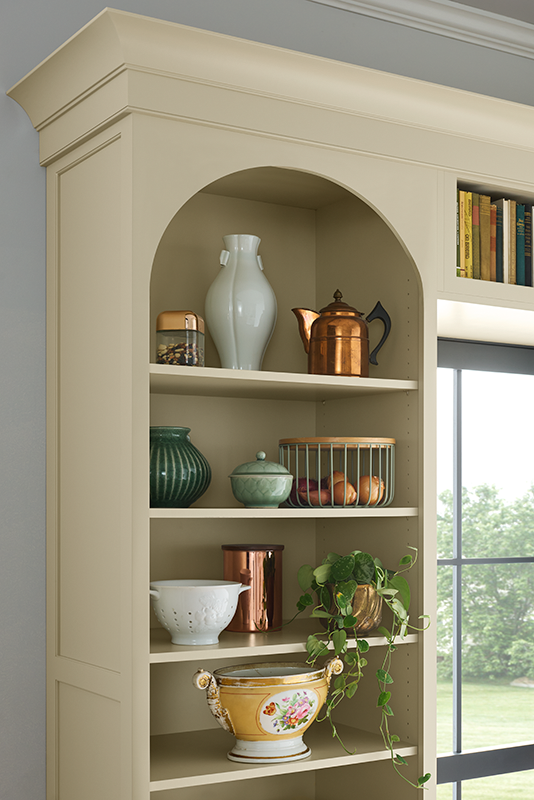
An arched opening highlights this shelf design by MasterBrand Cabinets with a touch of traditional detail.
Traditional design elements are back
Corbels, island feet, raised-panel doors, and decorative cabinet elements like wire mesh inserts have long been part of kitchen design. What’s changing is how designers add and combine these details.
MasterBrand Design Lead Shauna Lueken explains, “You’re picking apart little pieces of traditional style and adding them onto a modern set.” That approach preserves the ease of a modern kitchen design while allowing for a more personalized expression.
The goal isn’t to make the kitchen look more traditional; it's to give a modern kitchen more visual character—the kind that has made traditional design so enduring. The result can work across styles, too. A few carefully chosen details can enhance your kitchen's overall feel, add warmth to a transitional space, or give a more contemporary kitchen a sense of craftsmanship.
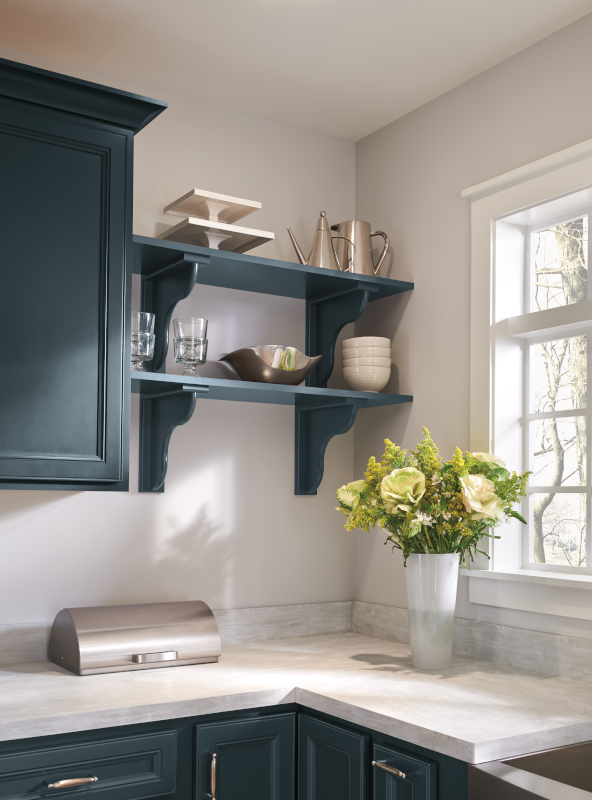
Painted corbels make this traditional shelf detail feel supported by a modern aesthetic.
The paint vs. stain rule
Color can dramatically change how a traditional detail reads, so the choice between paint and stain matters more than it may seem.
Painting traditional elements tends to keep them feeling lighter and more current. A painted corbel, raised panel, or furniture-style foot can introduce architectural shape and craftsmanship without making the kitchen feel overly formal.
Stain has a different effect, particularly when it’s paired with stained cabinetry. Natural wood can pull the entire room in a more traditional direction. If a fully traditional or rustic kitchen isn’t your goal, consider using paint or stain as an intentional design edit.
The idea isn’t to eliminate traditional details, but to consider how each element contributes to the kitchen's overall design language. The same principle applies to other kitchen cabinet ideas, including thoughtful kitchen cabinet hardware selections.
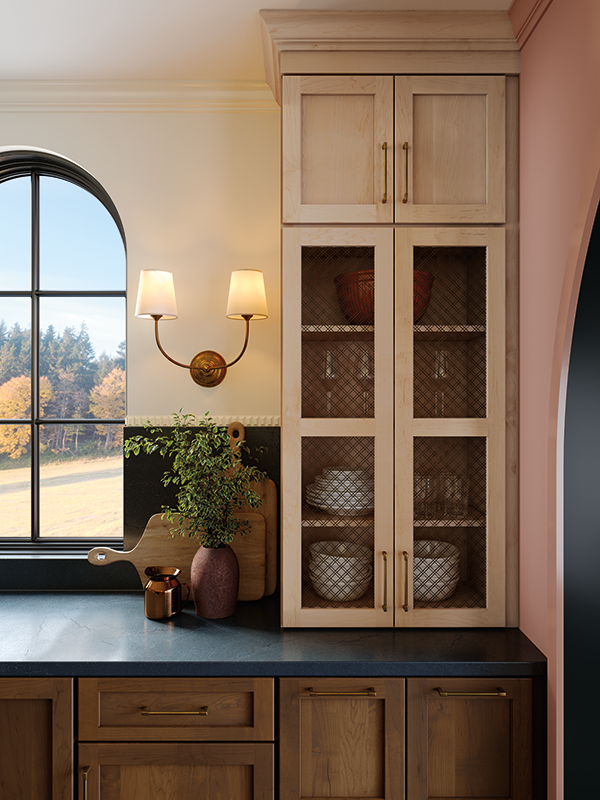
MasterBrand Cabinets' wire mesh inserts add visual interest in place of glass-front cabinetry.
Wire mesh inserts are having a moment
As traditional details make their way into contemporary kitchens, wire mesh cabinet inserts are gaining particular attention among trending kitchen cabinet styles. They add texture and visual interest to a cabinet door without relying on traditional glass-front cabinetry.
Unlike some decorative details, wire mesh can shift considerably depending on its scale and finish. That makes it especially useful when you want to fine-tune your aesthetic.
Consider the mesh size and how it affects the kitchen's overall style. A larger mesh has a relaxed quality that works beautifully in a farmhouse or rustic kitchen. A finer mesh can feel more refined and old-world.
Micro onlay doors keep detail subtle
Micro onlay doors offer another, more subtle evolution of the traditional cabinet door. They are beginning to appear in transitional kitchens as a more modern alternative to the Shaker door. For homeowners who want a more modern kitchen, this can be an effective middle ground.
Lueken explains, "These slim-profiled onlays are an exciting shift from the classic Shaker-style door. They add subtle detail around the outside of an almost slab-door style and enhance the overall aesthetic of the space. These small details really make a big difference in the end”
This detail adds dimension to a traditional cabinet door, but the pared-down profile may not be noticeable right away. That subtle detail is what makes micro onlay doors so versatile: they add definition without heavy ornamentation.
How much detail is too much?
Combining every traditional element into one kitchen can quickly move the design from intentional to themed. So where is the line when incorporating these elements?
A helpful designer framework is to choose one or two traditional elements and let the rest of the kitchen remain relatively restrained.
The paint-versus-stain rule is another powerful lever for keeping the space feeling fresh. Painted traditional details tend to blend easily into modern and transitional spaces, while stained details make a stronger statement and can pull the room toward a more traditional aesthetic.
The same principle applies whether you’re exploring farmhouse kitchen ideas, planning a farmhouse-style kitchen, or looking for more ways to add character to a contemporary space. You don’t have to choose between traditional and modern design. The most successful designs often borrow from both. Connect with a kitchen designer to explore which traditional details have the biggest impact in your space.
Ultimately, the goal isn’t to avoid traditional design altogether, but to be selective with the details you do choose.
FAQs: Kitchen remodel with traditional details
How do you add traditional details without making a kitchen feel dated?
Choose one or two traditional details and balance them with simpler cabinetry, modern finishes, and clean lines. Painting traditional elements instead of staining them can also help keep the overall look fresh and current.
What's the difference between painted and stained traditional cabinet details?
Painted details feel lighter and more contemporary, while stained wood emphasizes the natural material and gives traditional details a stronger, more classic feel. Staining can also make an entire kitchen read as more traditionally styled.
Why are corbels coming back in kitchen design?
Corbels add architectural detail and a furniture-like quality to cabinetry and kitchen islands. Used selectively, they bring warmth and character to an otherwise modern or transitional kitchen without making the space feel overly ornate.
What is a wire mesh cabinet insert?
A wire mesh cabinet insert replaces the solid center of a cabinet door with a metal mesh panel. It adds texture and visual interest, and offers an alternative to traditional glass-front cabinetry.
Does wire mesh scale affect the style, farmhouse versus old world?
Yes. Larger, open mesh tends to feel casual and farmhouse-inspired, while fine mesh creates a more refined, old-world traditional look. Scale can significantly influence how the same cabinet detail reads in the kitchen.
What is a micro onlay door, and how is it different from a Shaker door?
A micro onlay door has a subtle raised profile around the cabinet door. It adds dimension while remaining minimal. A Shaker door has a simpler, recessed center panel framed by simple rails and stiles, giving it a more distinct appearance.
How many traditional elements can you mix into a modern kitchen before it looks dated?
There isn’t one strict number, but utilizing one or two traditional elements is a helpful starting point for a modern or transitional kitchen. The more decorative details you introduce, the more important it becomes to balance them with simple cabinetry and contemporary finishes.
Are raised panel cabinets in style again?
Yes. Raised panel cabinetry is being showcased in more edited, contemporary ways. Rather than covering the entire kitchen in detailed cabinetry, designers are incorporating subtle raised panels alongside modern materials, colors, and hardware.
How do you make a farmhouse kitchen feel current instead of overdone?
Embrace traditional farmhouse details selectively, and pair them down with clean cabinetry, contemporary lighting, modern hardware, and restrained finishes. The goal is to capture farmhouse warmth and character without using every traditional element at once.